EZRA COLLECTIVE: The Band That Made Jazz a Contact Sport
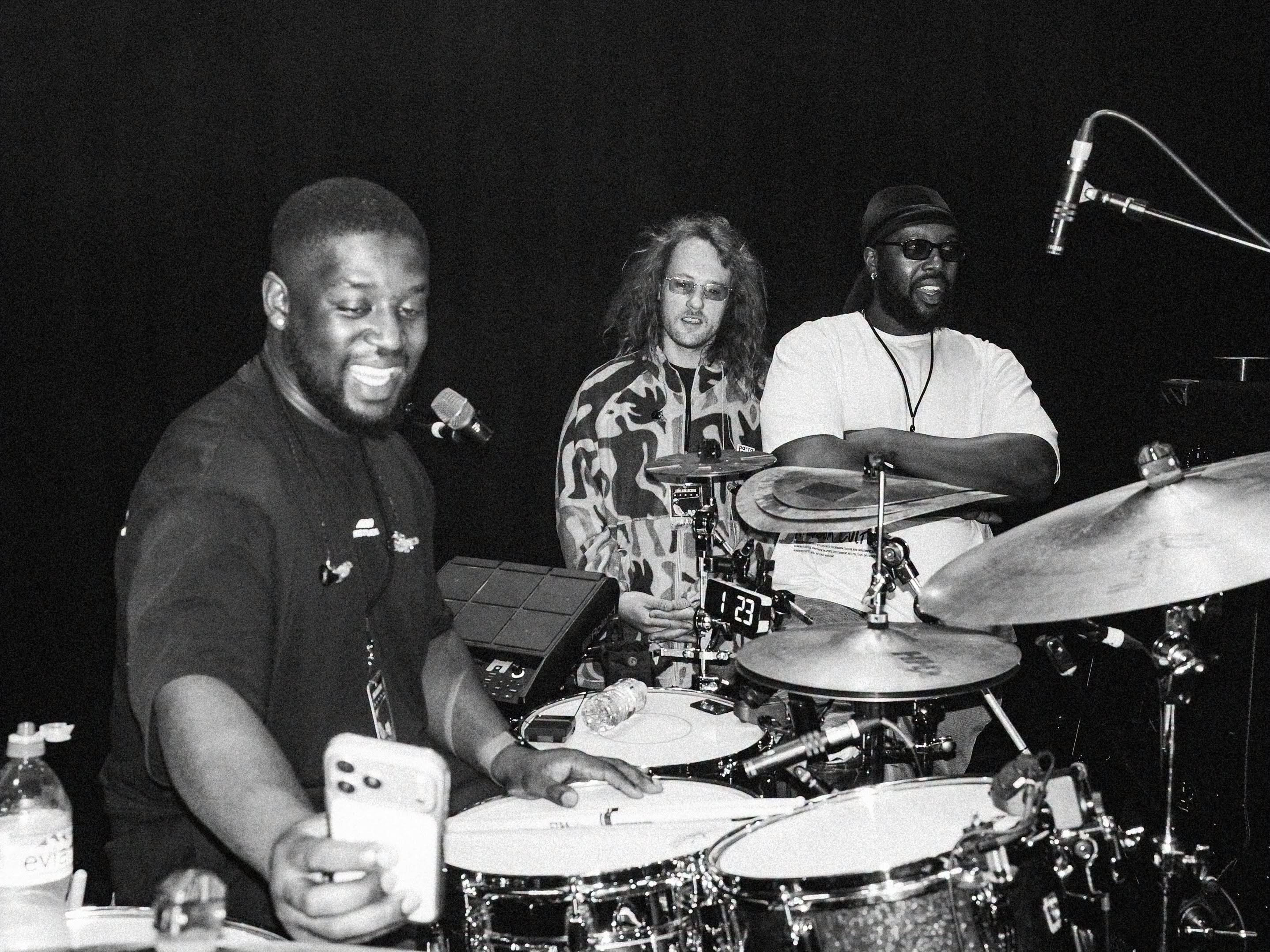
Quick: picture a jazz band. I'll bet you pictured a dim basement, a beret, and four men politely ignoring each other. Now throw that picture away, because Ezra Collective are the first jazz act ever to sell out Wembley Arena, and nobody in that building was being polite about anything.
Ezra Collective are five Londoners — drummer and bandleader Femi Koleoso, his brother TJ on bass, Joe Armon-Jones on keys, Ife Ogunjobi on trumpet, and James Mollison on sax — who met as teenagers in Tomorrow's Warriors, the youth jazz program that has quietly become the most important talent pipeline in British music. They formed the band in 2012, spent years grinding through the capital's small rooms and youth clubs, and then did something nobody saw coming: they made jazz feel like a Friday night.
That's not a metaphor. Go watch them live. Femi drums like he's trying to start a small fire with the kit; the horn lines land like choruses; the whole thing swings between Afrobeat, hip-hop, reggae, grime, and straight-ahead jazz without ever sounding like a playlist on shuffle. Their philosophy, if you can call joy a philosophy, is right there in the song titles: "God Gave Me Feet for Dancing." Barack Obama put that one on his favorite-songs-of-the-year list, which is the kind of co-sign you can't buy — though presumably Femi has tried to stay humble about it and failed.
The trophies tell their own story, and it's a story about doors getting kicked in. You Can't Steal My Joy (2019) announced them. Where I'm Meant to Be (2022) became the first jazz album ever to win the Mercury Prize — ever, in thirty-plus years of that award existing — and the footage of five grown men collapsing in a heap on the floor when their name was called remains one of the great award-show moments, precisely because nobody had rehearsed being happy. Then Dance, No One's Watching (2024) cracked the UK Top 10, and in 2025 they became the first jazz act to win the Brit Award for Group of the Year. Read that again: a jazz quintet won Group of the Year at the Brits. In the category that used to belong to whoever sold the most units at Tesco. If that doesn't tell you something shifted in British music, nothing will.
And they just kept going. September 2026 brought their fourth album, Here Because of Hope, which went straight to No. 1 on the UK Albums Chart — the first British jazz group in history to top it. The title comes from saxophonist Mollison's father, who left Jamaica for London seeking a better future for his kids: "I'm here because they hoped." It's the most Ezra Collective sentence ever written, and the record lives up to it: Afrobeat ("Sweet Echo"), Kingston horns ("Birdie Sings"), calypso ("El Corazon"), funky house ("Jubilee Feeling"), acid jazz and drum 'n' bass ("Black Flag"), with Leona Lewis lending soul to "All I Need" and Lila Iké riding the steel-pan-led "Well Organised." Globe-spanning, yes, but never tourism — this is a band playing the music of the city that raised them, and London contains multitudes.

Here's the part that actually matters, though. Femi Koleoso never misses a chance to say where this all came from: youth clubs. Not private school, not a conservatory with a Latin motto — a youth club with a drum kit and adults who gave a damn. He's become one of the loudest voices in Britain arguing that those spaces aren't a nice-to-have, they're the whole factory. Every Ezra Collective triumph is, in his telling, an argument for funding the unglamorous rooms where the next five kids are currently learning to play too loud. It's hard to argue with the evidence. The evidence just won a Brit.
There's a temptation to frame Ezra Collective as jazz's great crossover hope, the band that finally made the genre "accessible." That framing undersells them and insults jazz. What they actually did is simpler and harder: they refused to choose between virtuosity and joy. The musicianship is ridiculous — Armon-Jones could out-harmonize your favorite producer with one hand — but it's always in service of the room moving. Femi's stated philosophy — that the dancefloor is where a band can be honest about everything, no perfection required — describes both the band's music and its ethics. Just honesty, volume, and feet.
Four albums in, they're somehow both the biggest jazz band in Britain and still the five kids from the youth club. That's not a contradiction. That's the whole trick. And if you still think jazz is background music for wine bars, Ezra Collective would like a word — preferably shouted, over a drum solo, at Wembley.